Name the municipal layer before burial talk
Pennsylvania notes borough and township codes vary widely. Confirm which layer covers the Lancaster-area parcel, then keep cremation logistics documented even while that outdoor review continues.
Loading
Equine Cremation Services · Equine large-animal aftercare — transport, barn/farm logistics, mane & tail memorials
Lancaster decisions should begin with Lancaster County holding, the physical crematory address, and the correct borough or township code layer for any outdoor hope. Freeze-season refrigeration belongs in the same written packet before transport is authorized.
58,000 residents · small city · Humid Continental climate — cold, snowy winters and warm, humid summers · Regional / smaller market · satellite market role · 98 km to state hub
Place tier
small city
Climate
Humid Continental
Geography
Regional / smaller market
Hub distance
~98 km to hub
Local practical cue · Ask any provider whether cremation happens on-site, how pets are identified, and whether they can document chain of custody in writing.

Answer first · Lancaster
Educational horse aftercare guidance for families near Lancaster, Pennsylvania. Compare private vs communal paths, ask about identification and turnaround, and get written estimates from independent local providers. Equine Cremation Services is not a facility and does not verify operators in Lancaster.
Educational horse aftercare guidance for families near Lancaster, Pennsylvania. Compare private vs communal paths, ask about identification and turnaround, and get written estimates from independent local providers. Equine Cremation Services is not a facility and does not verify operators in Lancaster.
Educational only · not a facility · not a booking service
Private cremation means your horse is cremated alone and ashes are returned to you when that path is documented. Always confirm private chamber language in writing.
Communal cremation is shared with other animals. Individual ashes are typically not returned. Ask where communal remains are placed.
Equine Cremation Services is educational only. Independently operated facilities perform cremation and related services.
No. Equine Cremation Services is an educational guide only. Independently operated providers serve Lancaster, Pennsylvania — verify them yourself.
Ask any provider whether cremation happens on-site, how pets are identified, and whether they can document chain of custody in writing. Also confirm private vs communal documentation, identification, all-in cost, and turnaround.
Local logistics · Lancaster, Pennsylvania
Orientation notes for Equine Cremation Services readers in Lancaster, Pennsylvania. Not a facility directory — use these prompts when you interview independent providers.
Warm climates may shorten recommended hold times — confirm refrigeration or same-day options.
Suburban sprawl often means mileage fees — ask if quotes are flat or per mile.
Holiday weeks and peak summer can extend turnaround — ask for current capacity.
Provider density varies — compare at least two written estimates when possible.
Same questions everywhere for horse aftercare: private vs communal, identification, all-in cost, and turnaround. Local logistics only change the answers — not the checklist.
Photography
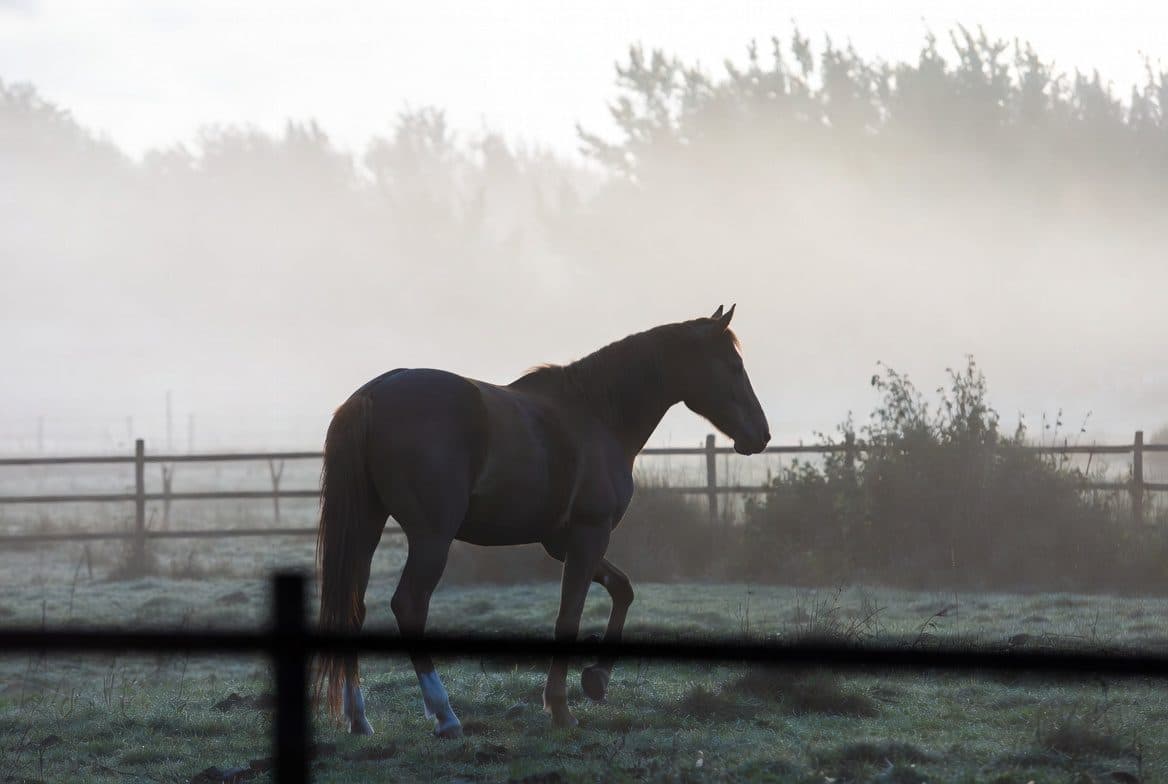
Atmosphere for Lancaster, Pennsylvania planning — not photos of a local facility or fleet.
Brand film · press play & unmute
Planning horse aftercare around Lancaster
A short narrated orientation on how city logistics shape aftercare questions. Unmute for voice.
How local logistics, transport, and timing shape aftercare — same questions everywhere.
Brand film · planning by city · captions available · press play · unmute for voice
Lancaster decisions should begin with Lancaster County holding, the physical crematory address, and the correct borough or township code layer for any outdoor hope. Freeze-season refrigeration belongs in the same written packet before transport is authorized.
Lancaster is inventoried in Lancaster County, Pennsylvania, near 58,000 population. That mid-size band supports ordinance and custody questions; it does not prove local processing capacity.
Pennsylvania notes borough and township codes vary widely. Confirm which layer covers the Lancaster-area parcel, then keep cremation logistics documented even while that outdoor review continues.
Winter freeze limits seasonal burial statewide. Ask who refrigerates the animal when roads or staffing slip, and require a return-timing start point instead of assuming same-day local completion.
PA DCNR state parks generally require written permission for scattering. Lancaster County market language does not choose the approving office—name the park unit.
Equine-focused aftercare education for transport, large-animal facilities, and lasting memorials — distinct from small-pet cremation brands in this network.
Content pillars for this brand: Equine transport & farm call · Large-capacity cremation · Mane/tail & memorial options · Emergency aftercare planning.
This brand centers large-animal chambers, cooling time, and ash volume expectations so owners ask the right facility questions first.
Farm calls, specialized vehicles, and distance-based fees are common. This site helps you ask about service radius and emergency response without inventing guarantees.
Many equine families keep braided mane or tail alongside a portion of ashes. This brand treats that as a first-class topic, not a footnote.
Equine cremation is often multi-hundred to multi-thousand dollars depending on size and distance. Ranges are framed as planning guidance, not quotes.
Strategy spine for this page: large-animal · timeline-first. Educational guide only — not a verified provider directory for Lancaster.
LLancaster, Pennsylvania (Lancaster County) is a small city of about 58,000 residents (mid-latitude humid continental at 40.04°, -76.31°), set in the Mid-Atlantic and characterized by a compact urban core with surrounding residential and light-rural edges where mileage fees begin to matter. This page is an educational horse aftercare guide from Equine Cremation Services — not a verified directory of local cremation facilities.
Place anchors for large animal planning in Lancaster: ~58,000 residents in Pennsylvania (Lancaster County), humid continental climate, regional / smaller market geography, in-state rank #8/12, density spread, drive band “regional,” logistics framed by ~87 km (~1 hr) from Baltimore. Useful comparison places in-dataset: Scranton, Harrisburg, York, Reading.
Lancaster ranks #8 of 12 in Pennsylvania. Straight-line distance to the Philadelphia hub (~1,603,000) is about 98 km (~1 hr planning estimate, drive band “regional”) — treat that as a hint for whether pickup/witnessing is truly local or hub-routed.
Lancaster is a smaller market, so families often coordinate with a provider based nearer a larger hub. Confirm service area, mileage fees, and the physical crematory address — not only a “serves Pennsylvania” claim. Combined with in-state rank #8/12 and drive band “regional,” that geography decides whether pickup is truly local or hub-routed (~87 km (~1 hr) from Baltimore).
Population-rank neighbors in Pennsylvania: larger Scranton (~76,000) and smaller Harrisburg (~50,000). Marketing written for Scranton does not automatically include a free Lancaster pickup. Geographic peers near Lancaster: York (~37 km), Reading (~46 km), Harrisburg (~56 km). Compare quotes across these named markets when mileage looks inflated.
Lancaster in Lancaster County is a smaller city/community market (spread small-city) — more single-family lots than hyperdense cores, but city ordinances and HOAs still bind burial/memorial choices. Pair that with transport reality: Lancaster is a longer regional hop from Baltimore (~87 km). Transport distance and after-hours holds usually move the quote more than urn catalogs — verify the physical crematory address. Alternate hub to compare: Philadelphia (~98 km) — the largest in-state city is not always the nearest useful chamber. Nearby named peers for quote comparison: York (~37 km) and Reading (~46 km).
Large-animal aftercare serving Lancaster (Lancaster County) is capacity-constrained: chamber size, farm/stable access across regional / smaller market terrain, and transport distance (~87 km (~1 hr) from Baltimore) decide feasibility before price does.
At Lancaster's small city scale (#8 in Pennsylvania), the useful questions are service area, mileage, and written process details — not metro-style facility counts.
Companion-pet household models do not estimate equine/livestock density. For Lancaster (Lancaster County) in the Mid-Atlantic, treat facility chamber limits and transport radius as the real dataset.
If the only suitable chamber is nearer Philadelphia (~98 km, ~1 hr), price transport separately from cremation.
Geography regional / smaller market at 40.04°, -76.31° affects trailer access and seasonal road reliability more than urban apartment rules.
Cost band moderate for companion pets is a weak proxy — large-animal quotes around Lancaster are transport-dominated.
Cold-stress high · heat-stress low: schedule farm moves around weather windows, not only price.
Seasonal timing near Lancaster: January-centered cold stress (Humid Continental) is when burial and mountain/rural transfers most often slip. Ask whether ashes can be held securely until a spring gathering. Seasonal road risk also applies on the ~87 km path toward Baltimore.
Lancaster is listed in Lancaster County in this dataset. County park rules, city ordinances, and private-land permissions are separate — a county-level “yes” does not cover every Lancaster address or HOA lot.
Lancaster is a longer regional hop from Baltimore (~87 km). Transport distance and after-hours holds usually move the quote more than urn catalogs — verify the physical crematory address. Alternate hub to compare: Philadelphia (~98 km) — the largest in-state city is not always the nearest useful chamber. Nearby named peers for quote comparison: York (~37 km) and Reading (~46 km).
Lancaster (~58,000, #8/12 in Pennsylvania) is a small city relative to the Philadelphia population hub (~1,603,000). Straight-line distance to that #1 market is about 98 km — roughly 1 highway hours as a planning hint, not a guarantee.
Drive band “regional” means you should treat aftercare as a two-location problem: where your Lancaster clinic or home is, and where cremation actually occurs. Ask whether the quoted price includes transport both ways, after-hours holds, and whether witnessing requires travel toward Philadelphia.
large-animal market reading: prioritize equine-rated crematory realities and equine trailer recovery honesty over anonymous “trusted local network” copy.
Population-rank neighbors in Pennsylvania: larger Scranton (~76,000) and smaller Harrisburg (~50,000). Marketing written for Scranton does not automatically include a free Lancaster pickup. Geographic peers near Lancaster: York (~37 km), Reading (~46 km), Harrisburg (~56 km). Compare quotes across these named markets when mileage looks inflated. Straight-line distance to population hub Philadelphia is ~98 km — useful when a quote assumes a Philadelphia-centric radius that may or may not include your Lancaster ZIP.
Drive-time band “regional”: Lancaster is ~87 km (~1 hr) from Baltimore. Expect mileage fees or next-routed-day pickup rather than metro same-hour service. Compare Baltimore vs Philadelphia (~98 km) — the state-largest city is not always the nearest useful chamber.
Nearest useful metro by distance: Baltimore (~87 km, pop ~585,000). Use it to sanity-check “local” marketing language.
Alternate metro for quote comparison: Philadelphia (~98 km).
We do not maintain a verified list of horse cremation providers for Lancaster. A clinic referral plus written portioned ash containers details beats anonymous “local trusted network” language.
If Philadelphia routing is expensive, ask whether an alternate larger market (Pittsburgh, ~316 km) is actually closer for your ZIP.
Lancaster is a longer regional hop from Baltimore (~87 km). Transport distance and after-hours holds usually move the quote more than urn catalogs — verify the physical crematory address. Alternate hub to compare: Philadelphia (~98 km) — the largest in-state city is not always the nearest useful chamber. Nearby named peers for quote comparison: York (~37 km) and Reading (~46 km).
Large-animal culture near Lancaster is barn and trailer culture across regional / smaller market terrain — not companion-pet directories.
Capacity talk: verify chamber weight ceiling; equine trailer recovery; equine-rated crematory. Hub: ~87 km (~1 hr) from Baltimore.
Soft ground, gate width, and winch needs dominate over urn aesthetics.
Equine Cremation Services angle: Equine large-animal aftercare — transport, barn/farm logistics, mane & tail memorials. Price mileage-dominated transport quote separately from chamber time.
Weather culture: heat low / cold high changes on-property removal window and road reliability.
Leave your details to request guidance. Someone may follow up within 1–2 business days. We do not publish a verified local provider list, and follow-up is not guaranteed.
Vet these questions against Lancaster's #8 in-state scale (small city, drive band “regional”) and moderate cost band — through Equine Cremation Services's horse owners, barns, and trainers needing large-capacity cremation logistics. Do not accept “we serve Pennsylvania” as a substitute for a Lancaster ZIP confirmation (Lancaster County), a physical equine-rated crematory address, and written livestock ownership authorization that protects portioned ash containers. Lancaster is a longer regional hop from Baltimore (~87 km). Transport distance and after-hours holds usually move the quote more than urn catalogs — verify the physical crematory address. Alternate hub to compare: Philadelphia (~98 km) — the largest in-state city is not always the nearest useful chamber. Nearby named peers for quote comparison: York (~37 km) and Reading (~46 km).
Educational large-animal comparison for Lancaster using Equine Cremation Services's horse owners, barns, and trainers needing large-capacity cremation logistics — not a provider roster. Interview with portioned ash containers language.
| Option | What it means | Reality in Lancaster | Ask before you buy |
|---|---|---|---|
| Equine-rated chamber booking | equine-rated crematory weight ceiling | Capacity sparse near Lancaster (Regional / smaller market) | verify chamber weight ceiling |
| Trailer / winch recovery | equine trailer recovery from barn/stable | ~87 km (~1 hr) from Baltimore | mileage-dominated transport quote separate from chamber |
| Portioned ash containers | Handle fifteen-to-twenty-five pound cremains | Multi-container planning for Lancaster | How many vessels? |
| Weather-held farm call | on-property removal window contingency | Heat low / cold high | Next routed farm day |
| mane-tail tribute piece tribute | Custom Monuments | Humid Continental outdoor durability | Production after return |
Using standard household and pet-ownership ratios as a rough model (not a local census), ~58,000 residents in Lancaster imply ~23,200 households, of which an estimated 11,600 include pets — companion-animal household models do not map cleanly to equine/livestock density — confirm large-animal aftercare capacity directly. At this small city scale, clinic referrals matter more than raw household models.
In a small city like Lancaster, your regular clinic is often the aftercare entry point. Specialty or 24-hour care may sit nearer Philadelphia (~87 km). Ask whether cremation pickup can originate from that ER, and who pays the transfer.
Urban character: a compact urban core with surrounding residential and light-rural edges where mileage fees begin to matter. Household pet rate (model): ~50-60%. Cost backdrop: Around Lancaster (~58,000 residents), pricing often tracks national averages: private cremation roughly $150–$350, communal roughly $50–$150, before add-ons. Request a written all-inclusive estimate. For Lancaster-scale markets, mileage from a larger hub often moves the total more than the base cremation line item.
cold, snowy winters and warm, humid summers
Cold-season logistics around Lancaster can delay rural/mountain transport and eliminate same-week burial. Confirm weather contingency windows before you authorize.
Large-animal aftercare near Lancaster (Regional / smaller market, the Mid-Atlantic) fails on capacity and transport long before it fails on urn selection.
Near small-market Lancaster, large-animal capacity is often hub-routed (~87 km (~1 hr) from Baltimore). Price equine trailer recovery separately from chamber time, and confirm barn-lane clearance before a truck is dispatched.
Lancaster (~58,000, #8/12 in Pennsylvania) is a small city relative to the Philadelphia population hub (~1,603,000). Straight-line distance to that #1 market is about 98 km — roughly 1 highway hours as a planning hint, not a guarantee.
Drive band “regional” means you should treat aftercare as a two-location problem: where your Lancaster clinic or home is, and where cremation actually occurs. Ask whether the quoted price includes transport both ways, after-hours holds, and whether witnessing requires travel toward Philadelphia.
An alternate larger market is Pittsburgh (~302,000, ~316 km). If one facility’s radius fee is high, compare whether Pittsburgh or Philadelphia routing is actually closer for your address — do not assume the state capital is always the cheapest path.
Population neighbor above Lancaster: Scranton (~76,000). Marketing written for Scranton does not automatically cover a free Lancaster pickup.
Seasonal timing near Lancaster: January-centered cold stress (Humid Continental) is when burial and mountain/rural transfers most often slip. Ask whether ashes can be held securely until a spring gathering. Seasonal road risk also applies on the ~87 km path toward Baltimore.
Drive-time band “regional”: Lancaster is ~87 km (~1 hr) from Baltimore. Expect mileage fees or next-routed-day pickup rather than metro same-hour service. Compare Baltimore vs Philadelphia (~98 km) — the state-largest city is not always the nearest useful chamber.
Lancaster is listed in Lancaster County in this dataset. County park rules, city ordinances, and private-land permissions are separate — a county-level “yes” does not cover every Lancaster address or HOA lot.
Lancaster is a longer regional hop from Baltimore (~87 km). Transport distance and after-hours holds usually move the quote more than urn catalogs — verify the physical crematory address. Alternate hub to compare: Philadelphia (~98 km) — the largest in-state city is not always the nearest useful chamber. Nearby named peers for quote comparison: York (~37 km) and Reading (~46 km).
Equine Cremation Services: Equine large-animal aftercare — transport, barn/farm logistics, mane & tail memorials. Confirm farm/stable access roads, gate width, and equipment before dispatch.
Seasonal stress — heat low, cold high — changes road reliability and holding needs around 40.04°, -76.31°.
Transport money check: Timing. Emergency evening removals often cost more than scheduled daytime service.
Lancaster is commonly served as a spoke from Baltimore (~87 km straight-line, drive band “regional”). Ask for mileage, after-hours holds, and whether witnessing requires travel to the hub facility — not a vague “we serve Pennsylvania” claim. Ask any provider whether cremation happens on-site, how pets are identified, and whether they can document chain of custody in writing.
Cold-season logistics around Lancaster can delay rural/mountain transport and eliminate same-week burial. Confirm weather contingency windows before you authorize.
Oversight context: Veterinary boards regulate veterinary practices; cremation facilities may be licensed locally or operate under general business/health permits depending on the jurisdiction. Ask for written process details rather than relying on marketing labels.
Equine Cremation Services reads Lancaster (the Mid-Atlantic) through a large animal lens: protect portioned ash containers, understand the large-chamber cremation run, and treat equine trailer recovery as a logistics fact — not a slogan.
Guardrails for every call: verify chamber weight ceiling; avoid no-capacity refusal mid-route; document with livestock ownership authorization; get a physical equine-rated crematory address that can serve your Lancaster ZIP.
Place anchors for large animal planning in Lancaster: ~58,000 residents in Pennsylvania (Lancaster County), humid continental climate, regional / smaller market geography, in-state rank #8/12, density spread, drive band “regional,” logistics framed by ~87 km (~1 hr) from Baltimore. Useful comparison places in-dataset: Scranton, Harrisburg, York, Reading.
Population-rank neighbors in Pennsylvania: larger Scranton (~76,000) and smaller Harrisburg (~50,000). Marketing written for Scranton does not automatically include a free Lancaster pickup. Geographic peers near Lancaster: York (~37 km), Reading (~46 km), Harrisburg (~56 km). Compare quotes across these named markets when mileage looks inflated.
Transportation is a significant consideration for equine aftercare. Specialized transport vehicles are required, and distance to the nearest equine-capable facility may be substantial. Some providers offer statewide or regional pickup; others require you to arrange transport. Re-check every national average ($800-$2,500 depending on size, transport distance, and memorial options) against this Lancaster address and drive band “regional.”
Process cue — Longer cycles, larger capacity. (Often multi-day): Equine cremation takes longer than small-pet services. Ask about timing for ash return and whether partial ash return is an option. Map that onto multi-hour chamber booking and on-property removal window under humid continental conditions.
These are educational service categories from Equine Cremation Services — not a verified list of facilities operating in Lancaster. Confirm availability with any business you contact.
Specialized large-capacity cremation for horses, ponies, and donkeys with professional handling and transportation.
Dedicated equine transport services ensuring dignified and professional handling throughout the process.
Grand memorial options for horses including custom monuments, memorial gardens, and tribute services.
On-farm euthanasia coordination and transportation services for horses on your property.
Ask maximum weight/length and whether ponies, donkeys, or draft horses are accepted before discussing memorial products.
A sealed braid is a durable memorial. Request it explicitly when arranging services.
Large-animal cremation and cooling can take many hours. Ask for a realistic ash-return window.
Keep two equine-capable contacts and your vet’s aftercare preferences written down before an emergency.
We do not publish a verified list of providers in Lancaster. Here's what this page actually offers:
Educational aftercare guides for neighboring places — not a list of cremation facilities.
Site map · entity rails
Educational links only — every path stays inside this brand's topic lane.
Key definitions
Private cremation
Your horse is cremated alone and ashes are returned when private processing is documented in writing. Always confirm chamber language before authorizing.
RelatedCommunal cremation
Shared cremation with other animals. Individual ashes are typically not returned. Ask where communal remains are placed.
RelatedWitnessed cremation
A path where you may be present at the start of the process. Ask what you will see, when, and any fees.
RelatedAsh return
Return of cremated remains to the family, usually with private cremation. Confirm container, turnaround, and identification steps.
RelatedTopic cluster · guides
Choosing an equine-capable provider
Choosing an equine-capable provider — a Horse Cremation long-read for horse owners, barns, and trainers needing large-capacity cremation logistics, written inside this brand’s lane (Equine large-animal aftercare) rather than a shared network template.
Documentation after equine cremation
Documentation after equine cremation — a Horse Cremation long-read for horse owners, barns, and trainers needing large-capacity cremation logistics, written inside this brand’s lane (Equine large-animal aftercare) rather than a shared network template.
Mane and tail memorial planning for horses
Mane and tail memorial planning for horses — a Horse Cremation long-read for horse owners, barns, and trainers needing large-capacity cremation logistics, written inside this brand’s lane (Equine large-animal aftercare) rather than a shared network template.
How we write this
Equine Cremation Services publishes educational comparison guidance for pet aftercare and memorials. We do not operate crematories, maintain a verified provider network, invent review scores, or sell in-stock products. State and practical notes are general orientation — confirm laws and logistics with licensed operators and local authorities. Prefer written estimates from independent providers before authorizing transport.
Use this guide to compare horse aftercare options for Lancaster and the wider Pennsylvania area, then confirm details with any provider you contact. Request guidance below if you want follow-up help — we do not publish a verified local roster.